
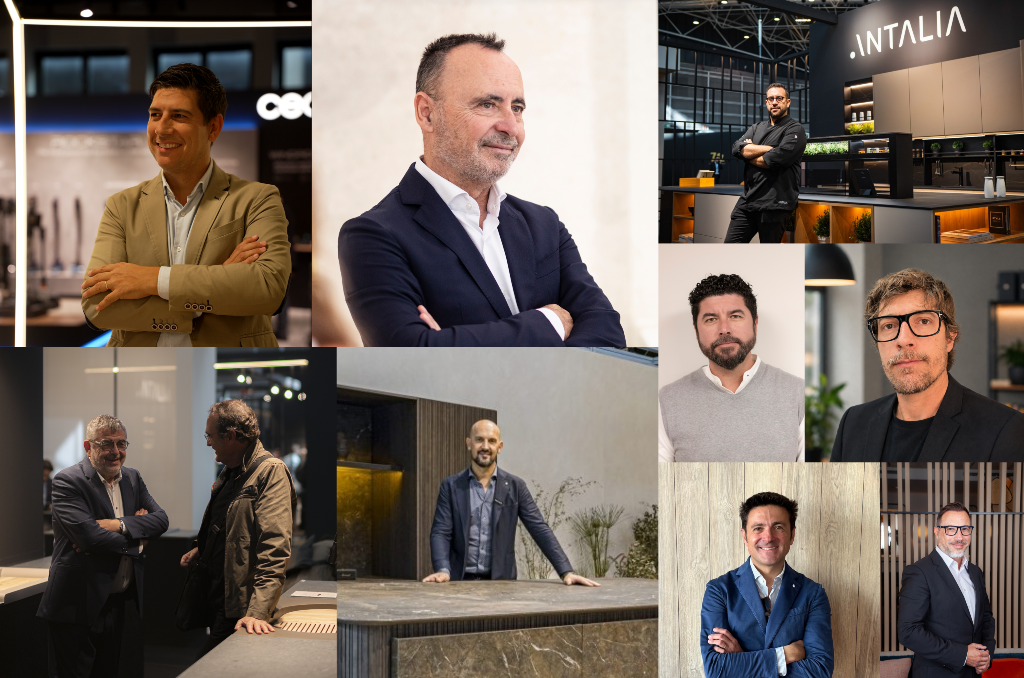
Companies highlight the strategic value of the new integrated trade fair model centered around the habitat sector and agree that the 2026 edition will strengthen the “visibility, innovation, and business opportunities” of the kitchen industry in an environment that is “increasingly cross-functional and connected.”
Valencia, June 10, 2026.—A trade fair set for success. Exhibitors participating in the next edition of Espacio Cocina SICI 2026, taking place from September 28 to October 1 at Feria Valencia, are enthusiastic that the event will be a “successful” gathering and a turning point for the kitchen sector within the broader habitat ecosystem promoted by Feria Valencia together with Feria Hábitat València, Textilhogar, and 360 by Cevisama, under the initiative “València Inspira Diseño.”
In fact, beyond the commercial component, the exhibitors consulted particularly emphasize the consolidation of a more cross-functional trade fair model, where kitchens, interior design, furniture, textiles, ceramics, and bathrooms are integrated into a single professional experience that reflects the current reality of space design.
In this regard, the testimonies of participating companies reveal a shared vision: Espacio Cocina SICI 2026 goes beyond the traditional concept of a sector-specific trade fair to establish itself as a strategic platform where innovation, design, sustainability, and business converge under a new way of understanding habitat and contemporary spaces.
Habitat as attraction and business
This vision of growth and expanded opportunities aligns directly with the analysis of Eduardo Martínez-Cosentino Ramos, Vice President of Sales for Iberia at Cosentino, who believes the sector is experiencing “a very significant moment” driven by factors such as “innovation, sustainability, the growing implementation of new technologies, and also new habits and lifestyles.” In this regard, he values Feria Valencia’s joint initiative as one that “offers a complete view of the quality and know-how of Spanish habitat manufacturers and brands,” and also insists that this format represents “the path to follow and consolidate in the future,” as it reflects a reality in which professional events must offer a broader perspective and become true business-generation spaces.
This global vision is shared by Ángel Mínguez, CEO of Poalgi, who believes that Espacio Cocina SICI will be “the perfect stage to showcase our evolution and reaffirm our national production as a guarantee of excellence and sustainability.” The executive also emphasizes that the true value of the event lies in the opportunity to establish more direct and emotional contact with professionals: “We want to inspire them, listen to them, and allow them to touch and experience firsthand the full potential of our brand.” For Mínguez, bringing all habitat sectors together in a single venue is also “a very wise strategic decision.”
Spaces increasingly integrated and user-oriented
This same evolution toward increasingly integrated spaces is shared by Cloen, whose director Pablo Cerra argues that the fair is “a strategic meeting point for sharing a vision with industry professionals” and that the simultaneous fairs “reflect the current reality of the sector: spaces that are increasingly integrated, cross-functional, and focused on the end user,” where the kitchen “is no longer an isolated element but part of an ecosystem where materials, technology, design, and functionality coexist.”
A similar reflection is made by Óscar Sánchez of Veneta Cucine, who highlights that Espacio Cocina SICI 2026 will allow the company to continue consolidating its presence in the Spanish market and strengthen contact with clients, interior design studios, architects, and specialized professionals. Sánchez believes that bringing all sectors together helps “create a much more attractive, dynamic, and enriching global habitat ecosystem for both exhibiting brands and professional visitors,” and explains that this reality reflects a clear market evolution because “today’s projects require a comprehensive vision of spaces, where kitchens, furniture, lighting, textiles, bathrooms, and contract sectors coexist naturally.”
Ramón Bel, of Cucine Lube España and Creo Kitchens, also focuses on the evolution that kitchens are undergoing within contemporary projects. The executive expects “a large turnout and, above all, visitors who are curious and interested in learning more about the world of kitchens,” and notes that direct contact remains essential for brands: “We invest heavily in presenting our brand and love being able to explain every detail of the projects, materials, and solutions we showcase.” He also argues that the sector should continue moving toward models similar to those of major international events to strengthen Valencia’s positioning.
One of the first aspects highlighted by companies is precisely the attraction power of this large, combined environment. David Verdoy Santa Cruz, Marketing Manager at Cecotec, believes that this new format will strengthen the event’s overall appeal and broaden its reach to new professional profiles. “The more attractive the fair is, the more visitors it will attract,” he says, adding that this joint proposal will allow the company to bring its solutions closer to profiles that are increasingly relevant in the development of contemporary projects: “It will allow us to present our products to architects and interior designers, who I am sure will be surprised by the design and integration solutions we are going to present.” Verdoy also notes that Espacio Cocina SICI 2026 will be “a great opportunity to present all our innovations in major household appliances.”
For MHK Ibérica, a leading purchasing and services group for the kitchen, bathroom, and home sectors, participation in the next edition of Espacio Cocina SICI 2026 represents a strategic opportunity to continue consolidating its position in the Spanish market and bring its value proposition closer to specialized retailers. “Espacio Cocina SICI 2026 offers us the ideal setting to showcase our key strengths: exclusive purchasing advantages, direct access to leading European brands, innovative private labels, digital tools, and a broad range of services aimed at improving the competitiveness of specialized distributors,” explains Juan Peña, Director of MHK Ibérica.
Meanwhile, the German company Bora particularly values the global framework offered by the joint gathering of the main habitat sectors at Feria Valencia. In this regard, they emphasize that “the simultaneous celebration of events related to kitchens, furniture, home textiles, and bathrooms accurately reflects the current evolution of the sector, where different areas of the home increasingly interact in an integrated way.” Bora believes that this cross-functional vision encourages knowledge exchange, the creation of synergies among professionals, and a more comprehensive approach to new habitat trends. “We believe this integrated approach responds to current market demands and offers a particularly attractive environment for architects, interior designers, distributors, and professionals seeking innovative solutions for the contemporary home,” they emphasize.
Opportunities and market connections
The importance of generating connections and new opportunities is also highlighted by Javier Castilla, CEO & Product Director of Rekker, who explains that the company’s participation will allow it to “connect with both potential clients and industry professionals, learn about emerging trends, and consolidate our market position.” Castilla also believes that the combination of sectors “provides a global and integrated vision of habitat,” creating “a more dynamic environment where business and collaboration opportunities multiply.”
Elena Ibáñez, Marketing Manager at Saitra, also approaches the event with optimism and expects that “the exhibitor participation rate will be higher than in previous years and that results will be even better than in past editions.” She considers a model where “the more sectors are included, the more beneficial it is for us” to be particularly positive, highlighting the possibility of connecting with a wider variety of professional profiles. Likewise, José Antonio Navarro of Somcasa shares this perception, stating that the joint offering “positions us better as a benchmark exhibition platform,” reinforcing the competitiveness of the habitat sectors as a whole.
A platform for direct contact with professionals
This trade fair model is also highly valued by brands that see Espacio Cocina SICI as a platform for innovation, visibility, and direct contact with professionals. Quooker highlights the value of the event as a showcase to demonstrate “how we bring innovation, functionality, and design to the modern kitchen,” emphasizing the importance of connecting with architects, interior designers, and distributors in an environment where home spaces are understood “in a much more connected way.”
Similarly, AEG advocates for a kitchen that is “more connected, more sustainable, and centered on the user experience,” arguing that technology “is not an end in itself, but a tool to make everyday life easier,” while highlighting the integration of sectors as a natural response to the evolution of contemporary design.
The fair as a sensory and emotional experience
The experiential and emotional component will also play a leading role in this edition. Anatoli Jiménez, Commercial Director of Delamora, explains that the company wants to turn its participation into “an experience that engages all six senses: the five we all know and a sixth that we hope visitors themselves will express and discover.” In addition to the sensory proposal, Jiménez highlights the importance of the fair’s relational component, noting that it will be “a great opportunity to spend enjoyable days with our distributors and establish new contacts with professionals interested in our brand.”
In the same vein, Nexo Küchen explains that the next edition of Espacio Cocina SICI comes at a particularly important moment for the company, as it will provide an opportunity to strengthen its positioning and consolidate its recent brand evolution. The company approaches the event “with great enthusiasm and with the goal of strengthening our presence within the sector,” viewing the fair as “a key opportunity to consolidate the rebranding we carried out last October and present it directly to professionals, distributors, collaborators, and specifiers.”
Transformation and business evolution will also shape the participation of some companies. This is the case of Antalia, whose Commercial Director Miguel Ángel García Vallejo defines this edition as “a before and after” moment for the company. “Antalia has been a benchmark at this event for years, and once again we hope to live up to what our brand represents and continue strengthening our position in the sector,” he says. García also highlights that “the combination of trade fairs as significant as Hábitat, Cevisama, and Espacio Cocina SICI helps enrich and elevate the quality of professional visitors,” reinforcing a model he considers essential for building a more complete and efficient experience for architects, designers, distributors, and specifiers.
From a positioning and expansion perspective, Cocinas Marín’s highlights the role of the event as a platform for gaining national visibility and opening new markets, emphasizing that such events “bring together different sectors under a single concept: the world of decoration and design.” Garbianti reinforces this idea by noting that the integration of kitchens, furniture, textiles, and bathrooms creates “a much more complete and cross-functional experience for professional visitors,” consistent with its holistic vision of the home.